
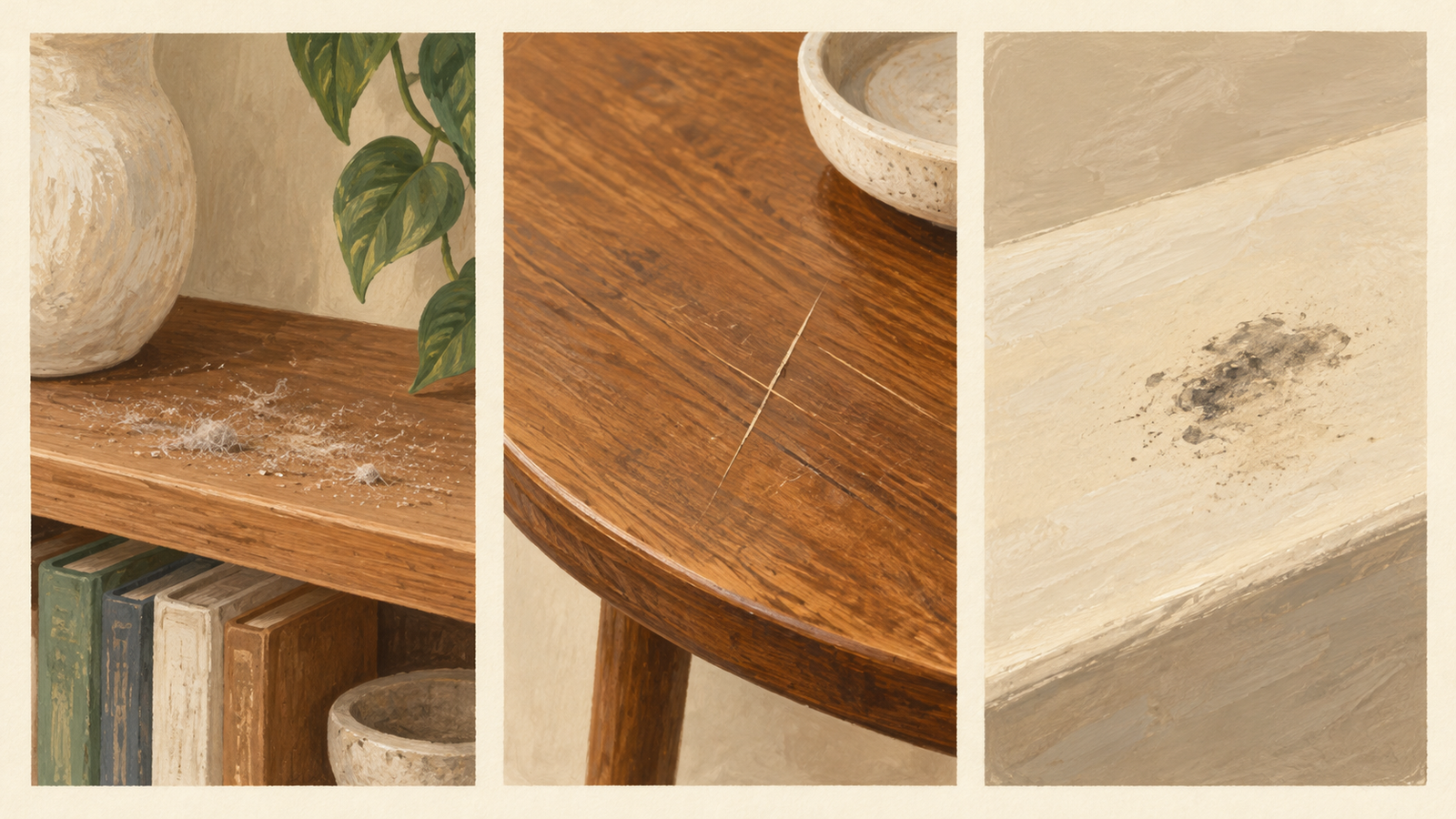
You spot a mark and wonder whether a deeper clean will take care of it. Before booking cleaning for your Middletown home, jot down what you can see. “Unknown” is a perfectly useful answer. You don't have to work out what caused every mark before asking about something that's bothering you.
Keep three things separate in your note: what you see, what you'd like to change, and what you need to ask. You can describe a mark without naming the material or deciding how it should turn out after cleaning. Start with the details you have, and leave room for the answer.
Write the observation before the explanation
Start with the room and the particular surface. “A dark mark near the edge of the tabletop” tells someone what you're looking at. “A stain that needs a stronger cleaner” already assumes a cause and a treatment. If you don't know those things, a plain description is enough.
Next, write down whether you noticed it before the visit. Use “seen before” when you know you did, or “unknown” when you're unsure. Seeing a mark for the first time afterward doesn't tell you when or how it got there. Keep that uncertainty in the note instead of guessing.
Then add what you're hoping for: dust removed, a mark discussed, or a clearer idea of what cleaning can cover. Put it as a question, such as “Can this be addressed within household cleaning?” That gives you a way to ask for help while leaving room to hear what's possible.
Use three rows to separate the questions
Here are three sample rows to help you write your own note. Each keeps the observation beside the question you want to ask. Fill in the last column after you've talked it through; until you have an agreed next step, leave it pending.
| Room / surface | Observation and requested outcome | Seen before visit or unknown | Question for the provider | Agreed next step |
|---|---|---|---|---|
| Room A / shelf | Visible dust; would like dust removed | Seen before | Can this shelf be included in the cleaning scope? | Pending discussion |
| Room B / tabletop | Visible scratch; want clarity about cleaning around it | Seen before | What household cleaning is appropriate here without treating the scratch as removable dirt? | Pending discussion |
| Room C / surface edge | Unidentified mark; would like to understand the cleaning limit | Unknown | Can the cleaning scope address this, or does it need a separate assessment? | Pending discussion |
Keep the note short enough to talk through together. Leave names, household photos and personal possessions out of the example. The useful details are the location, what you can see and what you'd like to ask. If you don't know the surface material either, say so rather than choosing a treatment.
Keep cleaning and repair questions separate
Edu's Cleaning provides house cleaning in Middletown. The Belford deep-cleaning page also explains where ordinary household cleaning ends and restoration begins. If you're hoping a stain or damaged spot will disappear, ask about it directly; cleaning may not remove it.
Give each item its own question. A dusty shelf, a visible scratch and a mark you can't identify need separate answers about what cleaning can cover. If the question is about repair or the material itself, leave it open until the right person can check it. You don't need to settle it yourself.
Use the note to start that conversation, without trying stronger and stronger products or abrasive tests along the way. You're writing down a question, not choosing a treatment. If the answer changes what you'd like done, check the revised cleaning scope before making plans around it.
Return to the same note after the visit
After the visit, go back to the same note and add what you now see. Keep your original words there too, so you can read the earlier question beside the later observation. Add the next step you've agreed on, or write “still awaiting an answer” if you're waiting to hear back.
If a mark is still there, describe it as you see it. The note alone won't tell you whether it's remaining soil, older wear or something else. Ask about that surface and the work you'd agreed on. A clear follow-up question is more useful than trying to decide the cause from the worksheet.
Request a cleaning estimate from Edu's Cleaning with the surfaces you'd like to discuss and the outcome you're hoping for. Share what you know and what you're unsure about, and ask which work can be included. If a mark is unidentified, keep its removal as a question to talk through.