

The refrigerator door can look fine straight on and covered in fingerprints when you walk past the window. A quick wipe sometimes leaves a wider cloudy patch around the handles. In a Belford kitchen that gets used all day, it is an annoying little job to repeat after the rest of the room is clean.
Start by finding out what finish you have. Stainless steel, coated stainless, and a fingerprint-resistant surface can look similar while having different care instructions. The appliance manual is more useful here than a bottle that promises to shine every kind of metal.
Check the finish before the first wipe
Look up the refrigerator’s care instructions using its model information. Keep the instructions handy for whoever does the cleaning. If a previous owner left a polish behind, do not assume it belongs on this appliance. A protective coating may rule out products that would otherwise be used on bare metal.
Remove magnets and papers yourself, keeping reminders together so nothing gets lost. Check the door for scratches or worn areas before starting. Photograph anything you want to keep track of. That makes it easier to separate a mark that was already there from residue left during cleaning, especially on a surface that changes appearance with the light.
Give the handles their own cloth area
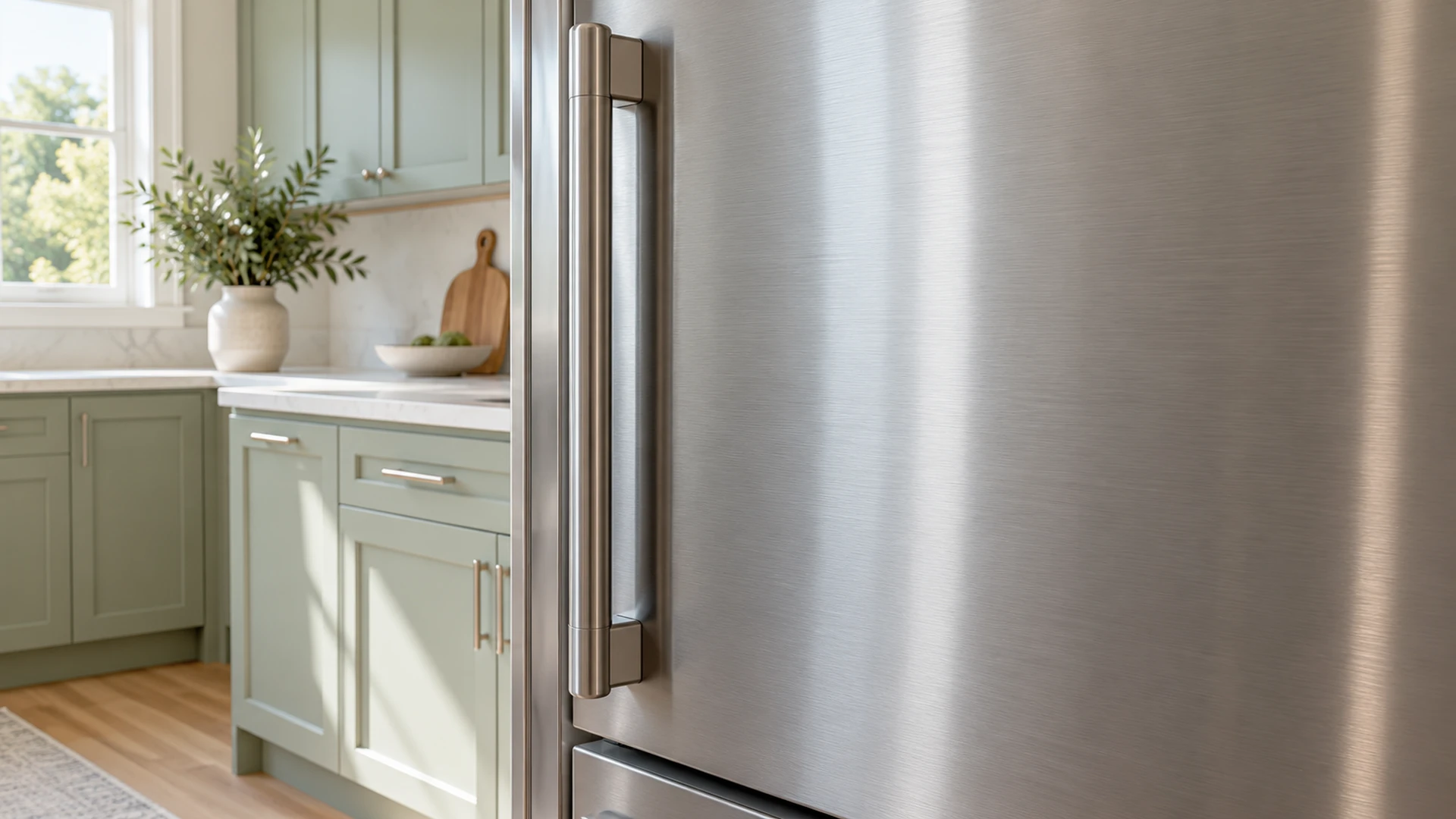
Hands touch the handles differently from the broad door panels. Work around each handle with a clean, soft cloth and the method allowed by the manufacturer. Turn the cloth often so you are lifting the residue instead of moving it onto the next section. Use light pressure, particularly around any coated surface.
Keep moisture away from the control panel, seams, and ice dispenser openings. Apply a permitted cleaner as its directions specify, without soaking the appliance. Cleaning the outside does not require removing handles, disturbing seals, or moving the refrigerator. If the handle is loose, leave that for an appropriate repair rather than trying to tighten it during the cleaning.
Check the refrigerator finish before choosing a cleaner.
Work across the door in small sections
Follow the appliance instructions for wiping direction and rinsing. Where they call for wiping with the grain, use the visible grain as your guide. Start with a small inconspicuous test area and let it dry before doing the whole door. A wet surface can hide streaks that show up a few minutes later.
Use a separate clean cloth for drying if the instructions call for it. A towel from the sink may carry soap or food residue even when it looks acceptable. If a cloudy patch remains, check whether the cloth or product is leaving material behind before adding more. Avoid abrasive pads and improvised mixtures; a scratch in a broad steel panel is very visible in side light.

Check the result from the doorway
Step back to the spot where you first noticed the fingerprints. Then look from the window side, with the surface dry. You do not need to polish until every reflection disappears. The metal will reflect cabinets and daylight differently across the door, even when it is clean.
Put the papers back only after the surface and magnets are dry. If the handle becomes marked again later, a small follow-up using the approved care method may be enough. Keep the appliance cloth somewhere separate from the one used on greasy cooking surfaces. It is much easier to start with the right cloth than to remove another layer of smeared residue.
Be specific when booking kitchen cleaning
If this job keeps getting pushed to the end of the week, review Edu’s house cleaning in Belford and explain which appliance surfaces need attention. For a kitchen with accumulated buildup, the Belford deep-cleaning page is a useful place to begin discussing the wider scope.
Say that the request is for refrigerator handles and exterior door panels. Appliance interiors, moving the refrigerator, and cleaning behind it need their own discussion. Share the finish instructions and point out any existing wear. Use the booking and estimate page to request the visit, with those details included. Once the scope is confirmed, clear the papers and magnets before the cleaner arrives so the whole panel can be reached safely.